
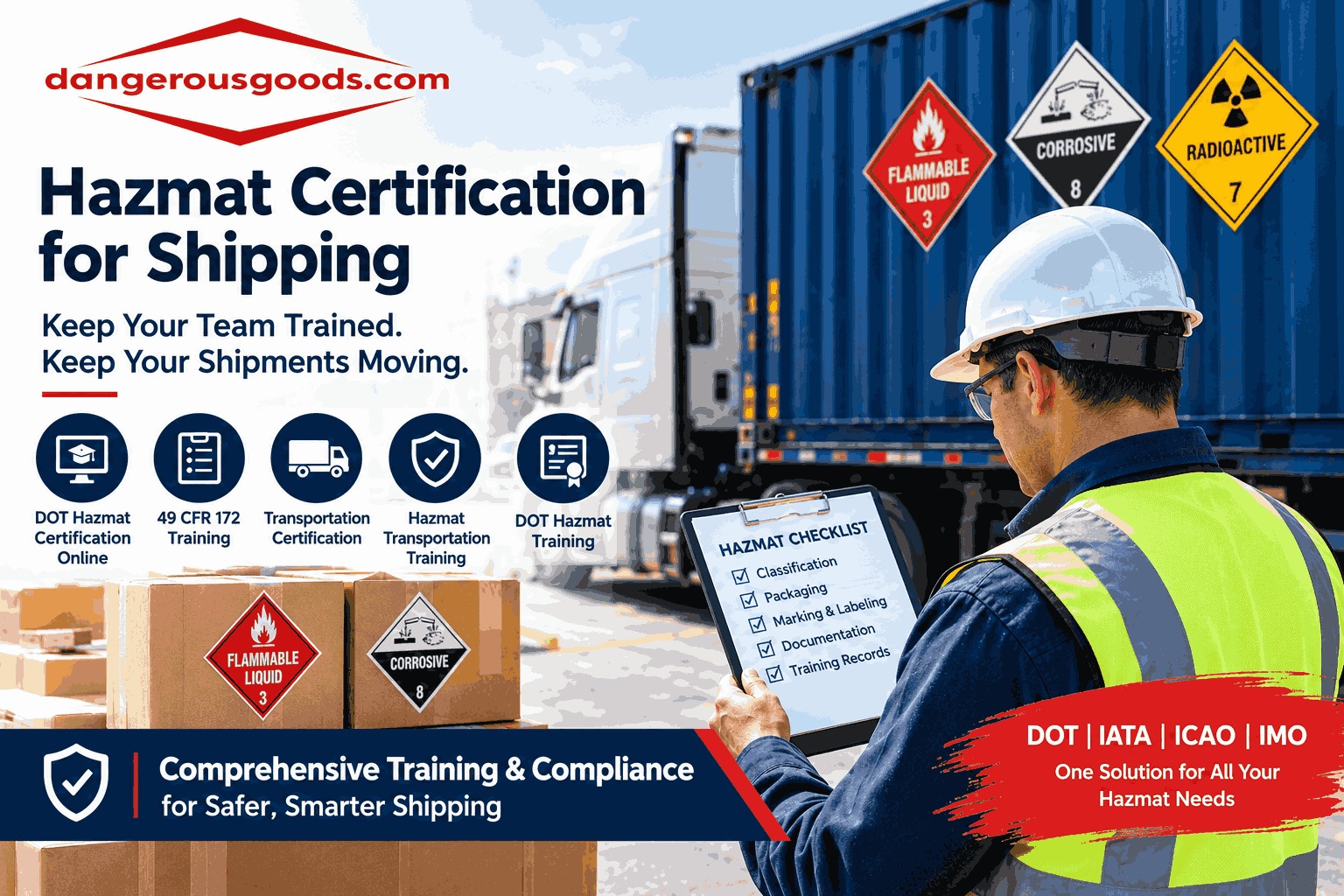
Hazmat Certification for Shipping: A Practical Guide for Shippers
You’ve probably seen it happen. A truck backs up to the dock and frowns. Somebody used the wrong shipping name, and now the load sits while everyone argues. That’s an expensive way to learn why Hazmat Certification for Shipping exists. If your company moves anything flammable, corrosive, or toxic, trained people aren’t optional. They’re the difference between a routine pickup and a very long evening. So here’s how it all works, minus the legal fog.
Which Employees Actually Need It?
More than just the driver. The U.S. definition of a hazmat employee is wider than what many managers think. It includes whoever packages the cargo or touches the shipment prior to departure. Sure, this may include the employee from accounting who writes out the description. All must be trained within 90 days of employment and retrained at least every three years thereafter. Many organizations learn the hard way when they fail to do so, usually during an audit – worst-case scenario. This will ensure proper Hazmat Certification for Shipping.
Inside 49 CFR 172 Training
Part 172 is where the day-to-day rules live. Think of it as the language packages speak. What goes on the shipping paper. Which marks and labels belong on a box. When a vehicle needs placards and what emergency information has to travel with the load. A decent 49 CFR 172 Training session walks you through the Hazardous Materials Table line by line. Since that’s where most mistakes begin. Then it layers on security awareness and lessons for your specific job. A forklift operator doesn’t need the same depth on documents as the person signing them. And good classes know that.
Weighing DOT Hazmat Certification Online
DOT Hazmat Certification Online is a popular search, and you can see why. Nobody wants to pull six people off the floor for two days. Just don’t pick on price alone. Before you sign anyone up, ask whether the material reflects recent changes to the regulations, whether there’s a test at the end, and whether you’ll receive a certificate to keep in each employee’s file. Also ask who you’d call with a question. Real DOT Hazmat Training should leave you with answers- not more confusion. A person on the other end of the phone matters more than most folks realize.
Transportation Certification Beyond the Road
Freight changes modes. A drum leaves Houston by truck, then boards a ship or gets bumped onto a plane. DOT covers the ground leg, but IATA and ICAO govern air cargo, and IMO handles ocean shipments, and they don’t all agree on details. That’s why Transportation Certification should match how you really ship. Not just how you hoped to. Look for Hazmat Transportation Training that spells out those differences. Instead of glossing over them if your team mixes modes.
More Than a Classroom
Training solves one problem. Plenty of others show up around it. Maybe you can’t tell how a chemical blend should be classified. You’re unsure what your packaging needs to survive a UN test. A full-service provider can step in on all of that: hazard classification and disposal. Add compliance consulting for DOT and IMO rules. And Hazmat Certification for Shipping turns into something your staff uses every day. Rather than a certificate collecting dust in a drawer.
The Cost of Winging It
Some shippers figure they’ll sort it out as they go. Occasionally that works. Then a drum gets rejected and the bill for guessing shows up all at once. Fines are higher than they used to be, and security checks are stricter. A few habits help: classify before you pack and file training records somewhere you can actually find them. With Hazmat Certification for Shipping behind your team, those habits stick.
Getting Your Team Ready
None of this has to be overwhelming. Make a list of everyone who touches hazardous freight and keep the records tidy. Check what your DOT Hazmat Certification Online choice includes and confirm your Transportation Certification covers every mode you use. Do that and Hazmat Certification for Shipping becomes a quiet strength instead of a nagging worry. Dangerousgoods.com, Inc. has trained and advised shippers across the Gulf Coast since 1980, so if you’d like a hand, they’re a phone call away.
Talk to a Hazmat Pro Today
Questions about training, certification, or packaging? Call 281-821-0859 or email larry.dangerousgoods@gmail.com for a free quote. We’re available 10 AM to 6 PM, and whether it’s one class or a full safety program, we’ll help you find the right next step.
1. Who has to complete hazmat training before shipping?
Anyone who packs, loads, labels, handles, or prepares paperwork for hazardous shipments qualifies as a hazmat employee under DOT rules. New hires need training within 90 days, and everybody refreshes it at least every three years afterward.
2. What topics does 49 CFR 172 training cover?
Expect shipping papers, marking, labeling, placarding, and emergency response information, along with the Hazardous Materials Table. Most courses also add security awareness, general safety, and job-specific lessons so each person learns what their own role requires.
3. Can online DOT hazmat training stand alone?
Sometimes, yes. Quality varies, though, so check that the course is current, includes testing, and provides a certificate for your records. For complex cargo, back it up with consulting or hands-on guidance from someone experienced.
Write a Comment