
Hazmat Shipping Training Online | Dangerous Goods Courses
What Is Hazmat Shipping Training?
Why Hazardous Materials Shipping Training Is Different
Dangerous goods transportation training has to account for more than one regulatory framework, because a single warehouse might ship the same product by truck one day and by air freight the next. Each mode carries its own packaging, labeling, and documentation rules, and a shipper who trains only to ground transportation requirements can unknowingly violate air or ocean regulations the moment a shipment changes carriers.DOT Ground Transportation Requirements
For hazmat shipping training tied to highway and rail transport, employees learn 49 CFR packaging groups, proper shipping names, UN identification numbers, and how to complete a compliant shipping paper for a ground shipment.IATA Air Shipping Requirements
Hazmat shipping training online for air freight follows IATA Dangerous Goods Regulations, which are considerably stricter than ground transport rules in areas like quantity limits, packaging instructions, and the Shipper’s Declaration for Dangerous Goods. Employees who prepare air shipments without IATA-specific training are one of the most common sources of dangerous goods shipping violations reported by carriers.IMDG Ocean Shipping Requirements
Ocean freight falls under the IMDG Code, and hazardous goods shipping training for this mode covers container stowage, segregation requirements between incompatible materials, and the documentation ocean carriers require before a hazmat container is accepted for loading.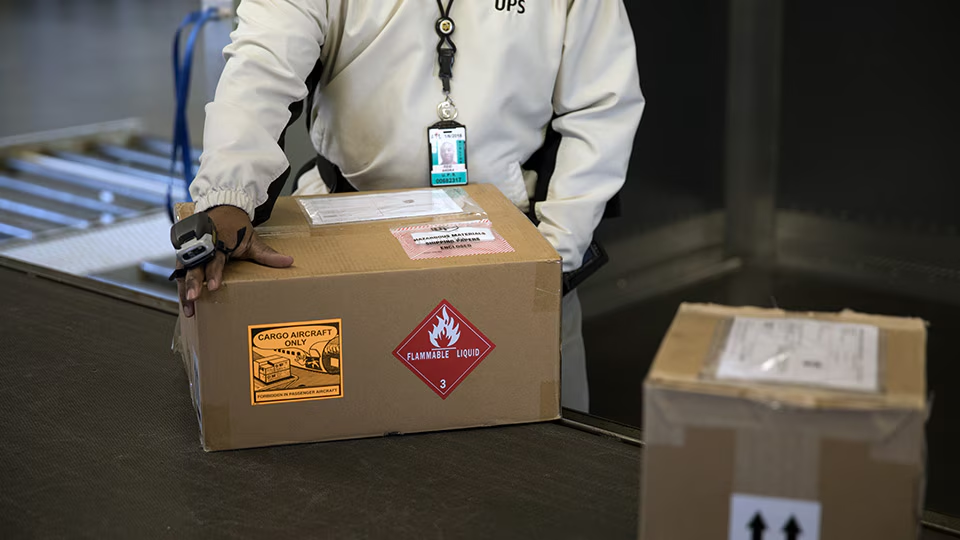
Who Needs Hazmat Transportation Training
Anyone in a shipping, warehouse, logistics, or export role who prepares, packages, labels, or documents a hazardous materials shipment needs hazmat transportation training before doing that work independently. This includes shipping clerks, warehouse packers, freight forwarders, and export compliance staff – not only the carrier or driver moving the freight. Even employees who only sign off on a completed shipping paper without physically packaging the shipment are considered hazmat employees under the applicable regulations and must be trained accordingly.
Shippers and Exporters
Exporters shipping dangerous goods internationally carry the added responsibility of getting classification and documentation right across two or more regulatory systems at once, which is why hazmat shipping training online for export-focused teams typically covers IATA and IMDG requirements side by side with DOT rules.
Warehouse and Fulfillment Teams
Warehouse staff who physically pack and label dangerous goods shipments need hands-on training in package selection, closure requirements, and how to apply the correct hazard labels and markings so a shipment is not rejected or delayed at the carrier’s dock.
What Dangerous Goods Shipping Training Covers
Classification and Identification
Employees learn to correctly identify hazard class, packing group, and proper shipping name for a given material – the foundation every other step in hazmat shipping training depends on.Packaging, Marking, and Labeling
This module covers UN-rated packaging selection, closure and orientation requirements, and the hazard labels, markings, and placards required for each mode of transport.Shipping Papers and Documentation
Employees practice completing a compliant shipping paper, including emergency response information, so a hazmat shipment is never released without the documentation a carrier or first responder needs.Hazmat Shipping Training Online vs. In-Person
Consequences of Skipping Hazmat Shipping Training
An untrained employee who misclassifies or mislabels a hazardous materials shipment creates risk that extends well past a compliance fine – a mislabeled dangerous goods shipment can be refused by the carrier, delayed indefinitely, or in a worst-case scenario, involved in an incident during transport.Related Hazmat Compliance Training
Employees whose responsibilities go beyond shipping into broader hazmat handling – loading, storage, or general workplace exposure – typically start with our DOT Hazmat Training to cover the general awareness content this shipping course builds on.
Warehouse and dock staff who need the full scope of federally required instruction, not just shipping-specific content, often complete DOT Hazmat Employee Training alongside this course to satisfy every applicable 49 CFR Subpart H component.
Shipping-focused employees ready to document their competency with a formal, auditable credential can pursue a Hazmat Certification for Shipping once this training is complete.
For a fully documented compliance record, employees can move from this course directly into DOT Hazmat Certification Online without repeating any material already covered here.
Why Choose Dangerousgoods.com for Hazmat Shipping Training in Houston, TX
Houston is one of the busiest hazardous materials shipping corridors in the country, home to the Port of Houston, a dense concentration of petrochemical exporters, and freight forwarders who move dangerous goods by truck, rail, air, and ocean every day. Dangerousgoods.com is headquartered in Houston, Texas, and our hazmat shipping training reflects that environment directly.
Local Expertise for Houston Shippers
Companies searching for hazmat shipping training in Houston TX work with a team that already understands Port of Houston export procedures, regional carrier requirements, and the mix of ground, air, and ocean shipping most local exporters handle. That means training that speaks to real shipping scenarios instead of generic examples.
Serving Houston and Shippers Nationwide
While our team is based in Houston, Texas, hazmat shipping training online is available to shipping and logistics staff anywhere in the country. Exporters throughout the Houston metro – including the Ship Channel, Pasadena, and Baytown – along with clients well outside Texas, complete the same dangerous goods shipping training and receive identical documentation for their compliance files.
Frequently Asked Questions
DOT hazmat training covers general requirements for anyone handling hazardous materials, while hazmat shipping training focuses specifically on classification, packaging, and documentation for shipments moving by ground, air, or ocean.
Air shipments follow IATA Dangerous Goods Regulations and ocean shipments follow the IMDG Code, both of which differ from DOT ground transport rules, so shippers handling multiple modes need training that covers each applicable framework.
Most hazmat shipping training, including IATA and DOT-based courses, requires recertification every two to three years depending on the regulatory framework and the employee’s specific role.
Yes. Our hazmat shipping training online is built to satisfy IATA, IMDG, and DOT requirements and generates the same completion documentation as classroom-based instruction.
Shipping clerks, warehouse packers, freight forwarders, and export compliance staff who classify, package, label, or document a hazardous materials shipment all need training before performing that work independently.
Yes. Our training team is based in Houston, Texas, but hazmat shipping training online is available to shippers and logistics teams nationwide.