
DOT Hazmat Training Requirements: A Plain-English Walkthrough
Your newest warehouse hire starts Monday. By Wednesday, he’s taping up a box of lithium batteries because everyone else is busy, and he’s guessing at the label. Nobody’s being careless on purpose. It’s just a normal week on a busy dock. But that guess is exactly where DOT Hazmat Training Requirements step in, and where plenty of companies find out they’ve been winging it. The rules aren’t secret. They’re just tucked inside regulation text that reads like a tax form. So grab a coffee, and let’s pull out the useful parts.
Who Counts as a Hazmat Employee?
The coverage extends farther than you might realize. Loading and handling all qualify. In addition, so does the employee who prepares shipping documentation. The person who checks the containers and the driver who transports the material. The clerical worker who writes a description for the material on a bill of lading also qualifies as a covered person. Here is an exercise. Get out of your office and go through your building with a pad of paper and jot down the names of every employee. Who comes into contact with the hazardous materials. Even if it is just once a month. That list is the foundation for your training program.
The 90-Day Window and the Three-Year Loop
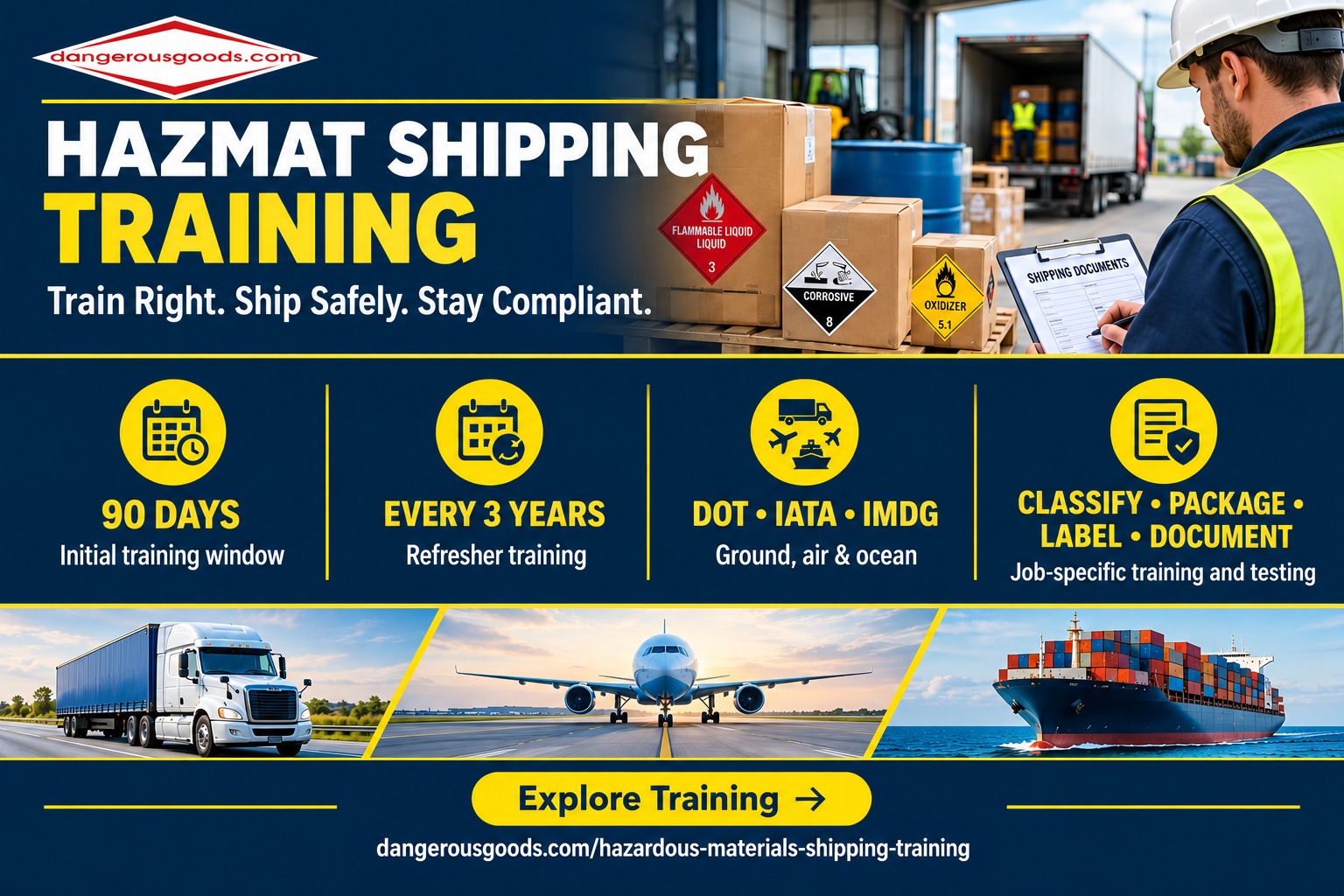
Timing trips up more companies than content does. When someone’s hired, or moves into a new hazmat job, you’ve got 90 days to finish their training. Until then, they work under the direct supervision of someone who’s already trained. After that, refresher training comes around at least every three years. Miss it by a week, and you’re technically out of compliance, even if the person knows the material cold. That’s the annoying part of DOT Hazmat Training Requirements: knowing your stuff doesn’t satisfy them. Proof does.
What 49 CFR 172 Training Actually Teaches
Subpart H of Part 172 lays out the building blocks. General awareness comes first, so people can recognize hazardous materials and get a feel for how the regulations are organized. Function-specific training follows, and it’s tied to the job each person does, not some generic overview. Then comes safety training: emergency response information, protective measures, and how to avoid exposure. Security awareness rounds out the list, and some employers also need in-depth security training, depending on their security plan. Good 49 CFR 172 Training gets hands-on with shipping papers, marks, labels, and placards too. Somebody who can recite the rules but can’t spot a missing label hasn’t really learned much.
Is DOT Hazmat Training Online Legit?
It can be, yes. Plenty of teams use DOT Hazmat Training Online because shifts overlap, sites are scattered, and pulling six people off the floor for two days hurts. But the rules still demand testing, and the content has to fit the job. A one-size course for “all hazmat employees” rarely suits a truck driver and a drum packer equally. So ask before you buy. How’s the test scored? Does the material reflect recent rule changes? What records come with it? And if you need proof for your files, DOT Hazmat Certification Online programs should hand you a clear certificate, not make you chase one.
When Freight Switches Lanes
Your shipments might not stay on the road. A drum rolls out by truck, then it’s loaded onto a plane or a ship. DOT covers the ground side, IATA and ICAO cover air, and IMO covers sea, each with its own expectations. So Hazmat Transportation Training works best when it follows the way you actually move product, rather than the way a textbook assumes you do. If you only ship by truck, don’t pay for air modules you’ll never touch. If you mix modes, don’t settle for ground-only material.
Support Beyond the Classroom
Meeting DOT Hazmat Training Requirements is rarely the only item on your list. Maybe you’re unsure how a chemical blend should be classified. Maybe your drums need UN specification testing, or the safety data sheet hasn’t been touched in years. That’s where a full-service provider earns its keep. Look for one that offers hazmat consulting and spill response, cleanup, and disposal. Custom safety programs can pull everything together so each piece supports the next.
Slip-Ups Auditors Spot Fast
Auditors see the same problems over and over. A training record with no test score. An employee two months past the three-year mark. A trainer’s name missing. Employers must keep each person’s name, latest training date, the training materials or a description of them, the trainer’s name and address, and a certification that the person was trained and tested. Those records stay on file for as long as the person holds the job, plus 90 days. Put reminders on the calendar about ninety days before each refresher. Treat DOT Hazmat Training Requirements like a forklift inspection: scheduled, written down, and not somebody’s side project.
Turning Rules Into Routine
On paper, all this looks intimidating. In practice, it boils down to a few steps. Find everyone who touches hazardous freight. Train them for the work they actually do. Test them. Keep the records. Then do it again every three years. Pair solid 49 CFR 172 Training with Hazmat Transportation Training that fits your modes, and choose between DOT Hazmat Training Online and classroom sessions based on what your crew needs, not what’s easiest to schedule. Once DOT Hazmat Training Requirements become routine, shipping gets calmer, and audits stop feeling like ambushes. Dangerousgoods.com, Inc. has helped Gulf Coast shippers get there since 1980, from training and testing to consulting and UN packaging.
Book a Hazmat Consultation
Not sure where your team stands? Call 281-821-0859 or email larry.dangerousgoods@gmail.com to ask about training classes, testing, or consulting. We’re open 10 AM to 6 PM, and you can request a free quote anytime. Let’s get your people trained the right way.
FAQs
1. How often is DOT hazmat training required?
New hazmat employees must complete training within 90 days of hire or a job change, working under supervision until then. After that, refresher training comes around at least every three years, and again whenever their duties change.
2. What training records must employers keep?
Employers must keep the employee’s name, latest training date, a copy or description of the materials, the trainer’s name and address, and a testing certification. Records stay on file for the employee’s tenure plus 90 days.
3. Is online training accepted for DOT hazmat compliance?
Yes, online courses can satisfy the rules when they cover general awareness, function-specific, safety, and security topics, include testing, and match the employee’s actual job. Make sure the provider also issues clear records you can show an auditor.
Write a Comment